“Whatever his ethical sins, Sims’s surgical exploitation of enslaved blacks was consonant with the medical practice of his time. For black women, forced experimentation was the standard of care.”
“Thus, although the heightened African American wariness of medical research and institutions reflects a situational hypervigilance, it is neither a baseless fear of harm nor a fear of imaginary harms.”
“In religion most especially, despite spreading her spirituality to the Americas and the Caribbean on the shackles of slavery—a condition that did not stem from their own volition—African religions did not aspire to conquer the world. If anything they were reticent, but they proved resilient.”
“Sims is revered as a women’s benefactor, although he conducted years of nightmarishly painful and degrading experiments, without anesthesia or consent, on a group of slave women.”
“The fictioning of African humanity is an integral part of the same enterprise of landscape apportionment”
“In what forms did that continent express its spirituality before the advent of Islam and Christianity? The answer is easiest grasped in the negative—and that answer is: not in any violent or conscriptive form.”
“Pan-Africanism looks forward to a genuinely united and independent Africa as the basis for the liberation of all Africans, both those on the continent and in the diaspora.”
“Put simply: politically, technologically, commercially, and in religion, Africa has never posed a hegemonic threat.”
“To my mind, on the contrary, Pan-Africanism might be more usefully viewed as one river with many streams and currents.”
“If Africa falls to the will of the fanatic, then the insecurity of the world should be accepted as its future and permanent condition. There are no other options.”
“The Haitian Revolution might also be considered an early form of Pan-Africanism, of African unity, alongside other acts of liberation carried out by the enslaved during this period, such as the Revolt of the Malés in Brazil in 1835.”
“The study is part of a pattern of experimental abuse, and many African Americans understand it as such, because a rich oral tradition has sustained remembrances of pain, abuse, and humiliation at the hands of physicians.”
“After 1945, it can be said that Pan-Africanism returned home to the African continent in the sense that its focus was much more directed to the liberation and unification of the African continent.”
“It is not in the interests of Africa to latch onto power and monopolize it to the extent of refusing to relinquish even a portion of it to a supra-national executive body so as to be able to arrive at an economic union. No one wants to relinquish an iota of national power.”
“There is a thin, choking pain that runs through Snow’s novels – a kind of primeval, community pain, unaccountable and incurable – that I find difficult to bear.”
“The more time goes by, the more it will be seen that we must either join in a continental federation or fall into a generalized and endemic state of anarchy.”
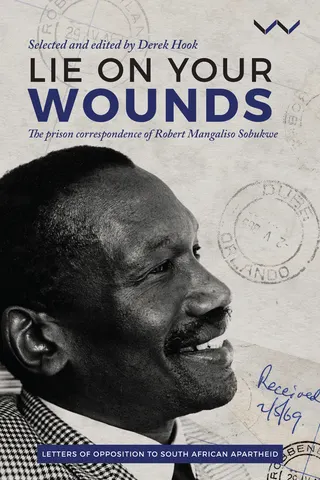
“Here is an opportunity for you to create history. Be involved in this historical task; the noblest cause to which man can dedicate himself – the breaking asunder of the chains that bind your fellowmen.”
“They seem to suffer purely and simply because they are themselves; their suffering is written into the code of their personality.”
“the fact remains that a continental federation is an urgently vital necessity for the totality of African peoples. In my opinion, it is the pre-condition for our collective survival.”
“The rational, economic organization of the African continent or any part of it cannot precede a common political organization along regional or continental federal lines.”
“The story told by the fireside does not belong to the storyteller once he has let it out of his mouth.”
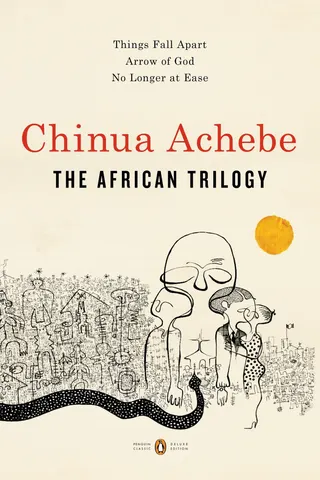
“The white man is very clever. He came quietly and peaceably with his religion. We were amused at his foolishness and allowed him to stay. Now he has won our brothers, and our clan can no longer act like one. He has put a knife on the things that held us together and we have fallen apart.”
“That this simple truth is glossed over in criticisms of his work is due to the fact that white racism against Africa is such a normal way of thinking that its manifestations go completely unremarked.”
“Art is important, but so is education of the kind I have in mind. And I don’t see that the two need be mutually exclusive.”
“I would be quite satisfied if my novels (especially the ones I set in the past) did no more than teach my readers that their past—with all its imperfections—was not one long night of savagery from which the first Europeans acting on God’s behalf delivered them.”
“But the Ibo people have a proverb that when a man says yes his chi says yes also.”
“One could almost write a whole chapter on him. Perhaps not a whole chapter but a reasonable paragraph, at any rate. There was so much else to include, and one must be firm in cutting out details. He had already chosen the title of the book, after much thought: The Pacification of the Primitive Tribes of the Lower Niger.”
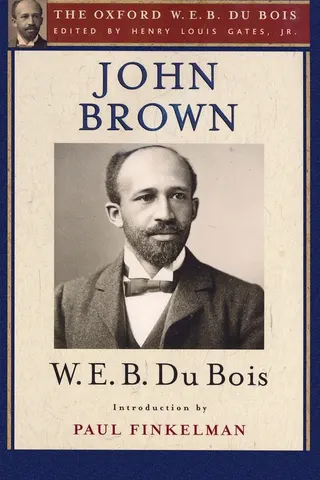
“The cost of liberty is thus a decreasing cost, while the cost of repression ever tends to increase to the danger point of war and revolution.”
“This, then, is the truth: the cost of liberty is less than the price of repression, even though that cost be blood.”
“Can nobody see the preposterous and perverse arrogance in thus reducing Africa to the role of props for the break-up of one petty European mind?”