“One’s mother tongue became the space of pain, to be avoided, and the conquering language becomes the space of pleasure, to be desired.”
“The point of my observations should be quite clear by now, namely that Joseph Conrad was a thoroughgoing racist.”
“No mesmo período, começou-se a produzir estudos em que a branquitude surgia como um lugar de privilégio, de poder, construído historicamente.”
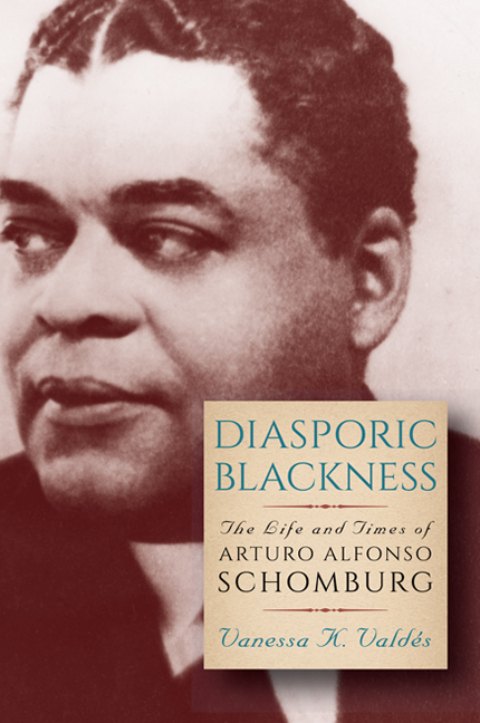
“For Senghor, rhythm was a cultural marker that united him to his diasporic comrades and that set black cultures apart from white civilization.”
“there is something tangible and inextinguishable about the rhythms; they persist and live while almost every other sign of Césaire’s African he”
“one of the most subtle and most pernicious forms of imperialism—imperialism in the guise of scientific knowledge.”
“Tribulation does not come without its good aspects. The positive and the negative constitute an inseparable pair.”
“For every native of every place is a potential tourist, and every tourist is a native of somewhere.”
“Why was "sisterhood" chosen as the basis of feminist alliances? Why not "co-mother"?”
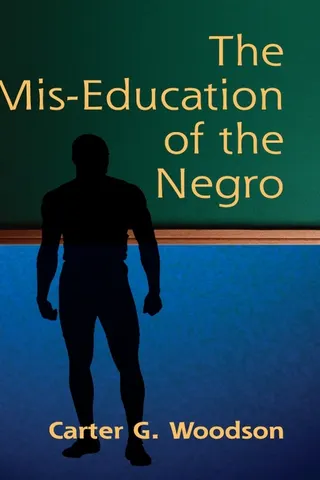
“The American Negro must remake his past in order to make his future.”
“If you can control a man’s thinking you do not have to worry about his action. When you determine what a man shall think you do not have to concern yourself about what he will do.”
“in search of my mother’s garden, I found my own.”
“That slogan captures precisely what I mean by ‘capitalist realism’: the widespread sense that not only is capitalism the only viable political and economic system, but also that it is now impossible even to imagine a coherent alternative to it.”
“One enters a room and history follows; one enters a room and history precedes. History is already seated in the chair in the empty room when one arrives.”
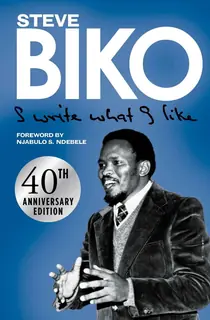
“At the heart of this kind of thinking is the realisation by the blacks that the most potent weapon in the hands of the oppressor is the mind of the oppressed.”
“We should avoid the superiority complex of those who know something and the inferiority complex of those who don’t know.”
“This is because a person who is capable of teaching shouldn’t distance themselves from anyone, especially from our people now. On the contrary, one should constantly immerse himself more among our people.”
“I felt not like a storm-swept feather but like that palm tree, a being with a background, with roots, with a purpose.”
“‘I am no Othello. Othello was a lie.’”
“Such a society becomes in time so thoroughly saturated with race prejudice that it sinks below the level of consciousness and becomes a part of the “human nature” of its members.”
“For the critique of Eurocentrism directly calls into question the position of the comfortable classes of this world.”
“A lucid awareness of the destructiveness of Eurocentrism is, in this case, a prerequisite for change.”
“Resistance to the critique of Eurocentrism is always extreme, for we are here entering the realm of the taboo.”
“In short, colonization, in the area of education, was always predicated on the negation of the colonized space as the starting point of knowledge.”
“Imperial languages had to be planted on the graveyard of the languages of the dominated. The death of African languages gave life to European languages. In order for the imperial language to be, the language of the colonized had to cease to be.”
“Under normal circumstances, it would sound odd to hear that French literature can only be written in Japanese, or English literature in IsiZulu”
“Any Kenyan of my generation will tell you that they knew many natural, historical landmarks of London they had never seen long before they knew a single street of their capital, let alone the major rivers of their country.”
“The goal was very clear. Imperial educational policies were meant to create colonies of the mind, among the elite of the colonized.”
“The lack of roots in our base creates a state of permanent uncertainty about our relationship to where we are, to our abilities, even to our achievements.”
“The language of the outsider becomes the language of power and normality.”