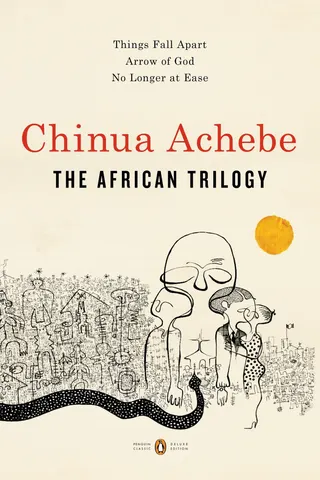
“Among the Ibo the art of conversation is regarded very highly, and proverbs are the palm-oil with which words are eaten.”
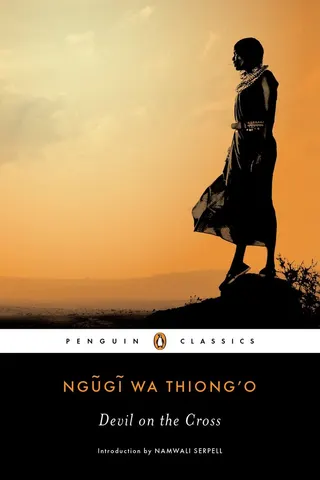
“Kĩmeendeeri will also build schools in which the workers’ children will be taught that the system of drinking human blood and eating human flesh has always held sway since the world was created and will always hold sway until the end of the world, and that there is nothing people can do to put an end to the system.”
“The children will be allowed to read only those books that glorify the system of drinking human blood and eating human flesh. They will not be allowed to ask questions about the conditions of their lives or those of their parents”
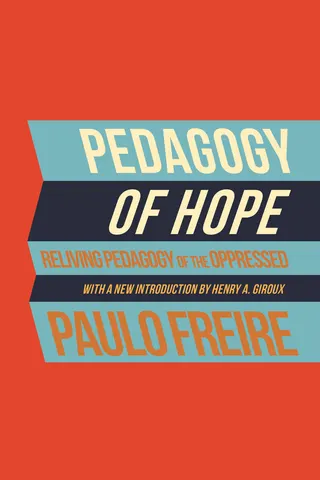
“No, my hope is necessary, but it is not enough. Alone, it does not win. But without it, my struggle will be weak and wobbly. We need critical hope the way a fish needs unpolluted water.”
“That is why there is no hope in sheer hopefulness. The hoped-for is not attained by dint of raw hoping. Just to hope is to hope in vain.”
“I am hopeful, not out of mere stubbornness, but out of an existential, concrete imperative.”
“When it becomes a program, hopelessness paralyzes us, immobilizes us. We succumb to fatalism, and then it becomes impossible to muster the strength we absolutely need for a fierce struggle that will re-create the world.”
“How could he enlarge their consciousness so that they could see themselves, Ilmorog and Kenya as part of a larger whole, a larger territory containing the history of African people and their struggles?”
“Reading the world is an antecedent act vis-à-vis the reading of the word.”
“Without a minimum of hope, we cannot so much as start the struggle. But without the struggle, hope, as an ontological need, dissipates, loses its bearings, and turns into hopelessness. And hopelessness can become tragic despair.”
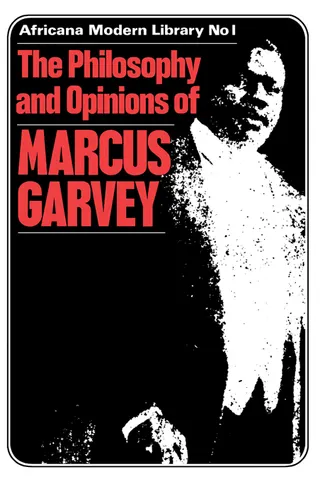
“The history of a movement, the history of a nation, the history of a race is the guide-post of that movement’s destiny, that nation’s destiny, that race’s destiny.”
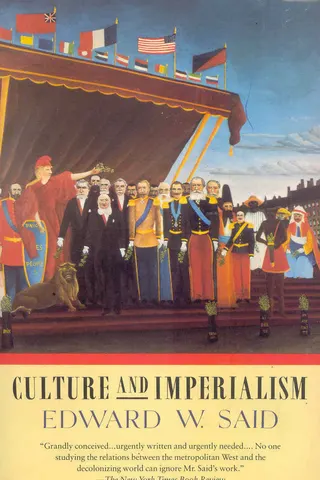
“Knowledge of the Orient, because generated out of strength, in a sense creates the Orient, the Oriental, and his world.”
“The Orient was almost a European invention, and had been since antiquity a place of romance, exotic beings, haunting memories and landscapes, remarkable experiences.”
“The Oriental is irrational, depraved (fallen), childlike, “different”; thus the European is rational, virtuous, mature, “normal.””
“Orientalism, then, is knowledge of the Orient that places things Oriental in class, court, prison, or manual for scrutiny, study, judgment, discipline, or governing.”
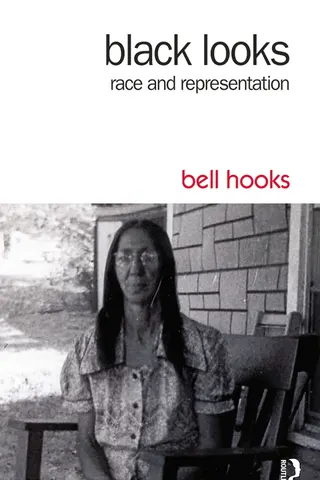
“Within commodity culture, ethnicity becomes spice, seasoning that can liven up the dull dish that is mainstream white culture.”
“In a white supremacist context “loving blackness” is rarely a political stance that is reflected in everyday life. When present it is deemed suspect, dangerous, and threatening.”
“Afraid to look, but fascinated by the gaze. There is power in looking.”
“That all attempts to repress our/black peoples’ right to gaze had produced in us an overwhelming longing to look, a rebellious desire, an oppositional gaze. By courageously looking, we defiantly declared: “Not only will I stare. I want my look to change reality.””
“Replacing negative images with positive ones can be equally problematic if the function of stereotypes as controlling images remains unrecognized.”
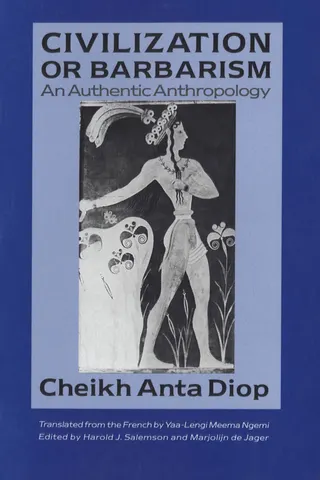
“the feeling of historical unity, and consequently of cultural identity that scientific research is capable of providing at this time to the African cultural consciousness, is not only qualitatively superior to all those known up to now, but also plays a protective role of the first order in this world characterized by the generalization of cultural aggression.”
“Survival in fact is about the connections between things”
“The power to narrate, or to block other narratives from forming and emerging, is very important to culture and imperialism, and constitutes one of the main connections between them.”
“No one today is purely one thing. Labels like Indian, or woman, or Muslim, or American are not more than starting-points, which if followed into actual experience for only a moment are quickly left behind.”
“stories are at the heart of what explorers and novelists say about strange regions of the world; they also become the method colonized people use to assert their own identity and the existence of their own history.”
“Imperialism consolidated the mixture of cultures and identities on a global scale. But its worst and most paradoxical gift was to allow people to believe that they were only, mainly, exclusively, white, or Black, or Western, or Oriental.”
“The main battle in imperialism is over land, of course; but when it came to who owned the land, who had the right to settle and work on it, who kept it going, who won it back, and who now plans its future—these issues were reflected, contested, and even for a time decided in narrative.”
“The God in black theology is the God of and for the oppressed, the God who comes into view in their liberation. Any other approach is a denial of biblical revelation.”
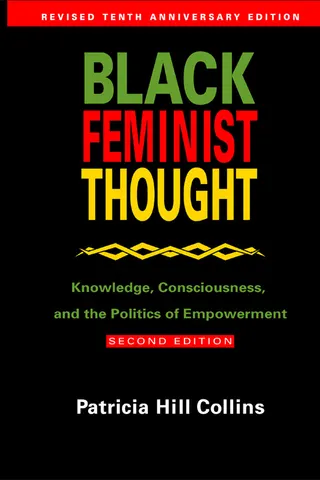
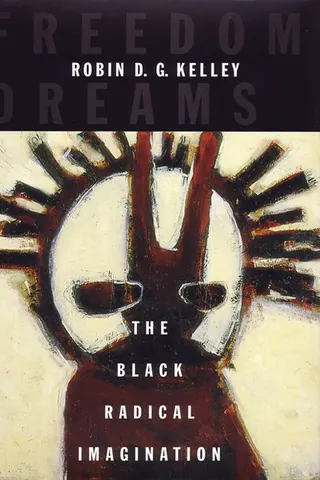
“I am convinced that the opposite is true: Social movements generate new knowledge, new theories, new questions.”
“Progressive social movements do not simply produce statistics and narratives of oppression; rather, the best ones do what great poetry always does: transport us to another place, compel us to relive horrors and, more importantly, enable us to imagine a new society.”