“In a white supremacist context “loving blackness” is rarely a political stance that is reflected in everyday life. When present it is deemed suspect, dangerous, and threatening.”
“Afraid to look, but fascinated by the gaze. There is power in looking.”
“Racial integration in a social context where white supremacist systems are intact undermines marginal spaces of resistance by promoting the assumption that social equality can be attained without changes in the culture’s attitudes about blackness and black people.”
“That all attempts to repress our/black peoples’ right to gaze had produced in us an overwhelming longing to look, a rebellious desire, an oppositional gaze. By courageously looking, we defiantly declared: “Not only will I stare. I want my look to change reality.””
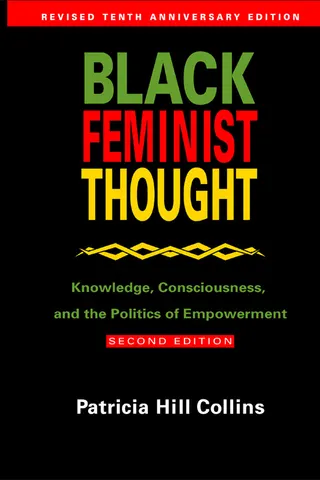
“Her gender may be more prominent when she becomes a mother, her race when she searches for housing, her social class when she applies for credit, her sexual orientation when she is walking with her lover, and her citizenship status when she applies for a job.”
“Oppression is not simply understood in the mind—it is felt in the body in myriad ways.”
“a world in which behavior is a statement of philosophy and in which a vibrant, both/and, scholar/activist tradition remains intact.”
“It is unthinkable that oppressors could identify with oppressed existence and thus say something relevant about God's liberation of the oppressed.”
“Black theology will not spend too much time trying to answer its critics, because it is accountable only to the black community.”
“Nat Turner and John Brown were political prisoners in their time.”
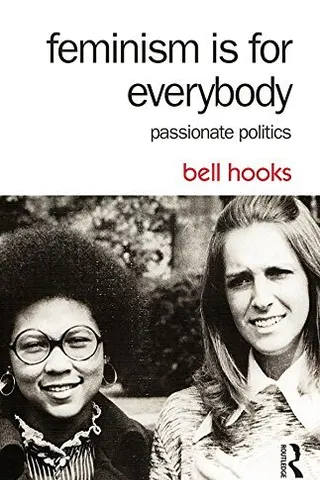
“For years many feminist women held to the misguided assumption that gender was the sole factor determining their status. Breaking through this denial was a crucial turning point for feminist politics.”
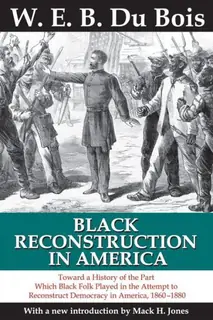
“Nations reel and stagger on their way; they make hideous mistakes; they commit frightful wrongs; they do great and beautiful things. And shall we not best guide humanity by telling the truth about all this, so far as the truth is ascertainable?”
“We shall never have a science of history until we have in our colleges men who regard the truth as more important than the defense of the white race, and who will not deliberately encourage students to gather thesis material in order to support a prejudice or buttress a lie.”
“That dark and vast sea of human labor in China and India, the South Seas and all Africa; in the West Indies and Central America and in the United States—that great majority of mankind, on whose bent and broken backs rest today the founding stones of modern industry—shares a common destiny”
“It must be remembered that the white group of laborers, while they received a low wage, were compensated in part by a sort of public and psychological wage. They were given public deference and titles of courtesy because they were white.”
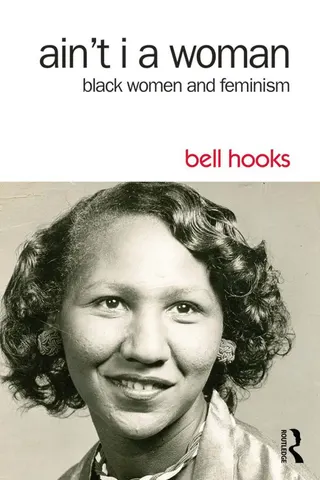
“Our silence was not merely a reaction against white women liberationists or a gesture of solidarity with black male patriarchs. It was the silence of the oppressed—that profound silence engendered by resignation and acceptance of one’s lot.”
“Resolution of the conflict between black and white women cannot begin until all women acknowledge that a feminist movement which is both racist and classist is a mere sham, a cover-up for women’s continued bondage to materialist patriarchal principles, and passive acceptance of the status quo.”
“No other group in America has so had their identity socialized out of existence as have black women. We are rarely recognized as a group separate and distinct from black men, or as a present part of the larger group “women” in this culture.”
“When black people are talked about the focus tends to be on black men; and when women are talked about the focus tends to be on white women.”
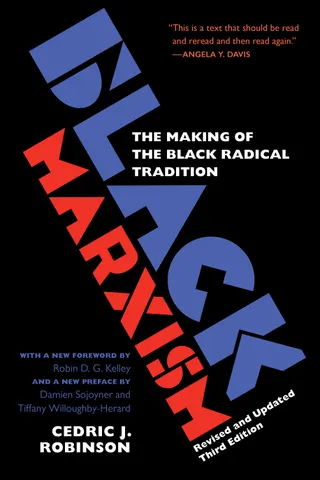
“Harbored in the African diaspora there is a single historical identity that is in opposition to the systemic privations of racial capitalism. Ideologically, it cements pain to purpose, experience to expectation, consciousness to collective action.”
“The development, organization, and expansion of capitalist society pursued essentially racial directions, so too did social ideology. As a material force, then, it could be expected that racialism would inevitably permeate the social structures emergent from capitalism.”
“Racism, I maintain, was not simply a convention for ordering the relations of European to non-European peoples but has its genesis in the “internal” relations of European peoples.”
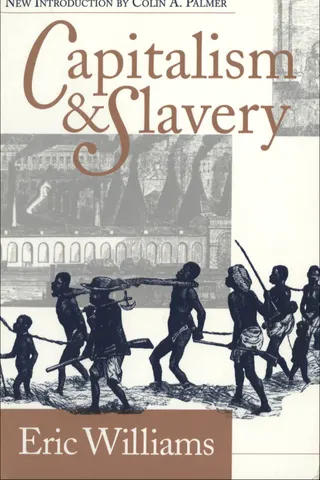
“A racial twist has thereby been given to what is basically an economic phenomenon. Slavery was not born of racism: rather, racism was the consequence of slavery.”