Where to start with Marxism and socialism: a reading list
Marxism is the theory, first set out by Karl Marx and Friedrich Engels in the 1840s, that history is driven by the struggle between classes, that capitalism lives by extracting unpaid labour from workers, and that workers can and must replace it with a society run in common: socialism, and in the end communism. The Communist Manifesto appeared in February 1848; the first volume of Capital in 1867. In the twentieth century these ideas inspired revolutions in Russia, China, Vietnam and Cuba, and shaped liberation movements across Africa and the Caribbean.
For Ominira's readers, Marxism matters less as dogma than as a tool that African and diaspora thinkers picked up, tested and remade. Padmore broke with Moscow, Cabral insisted on starting from Guinea's own reality, Sankara and Rodney fused socialism with Pan-Africanism. To follow their arguments you need the originals they were arguing with.
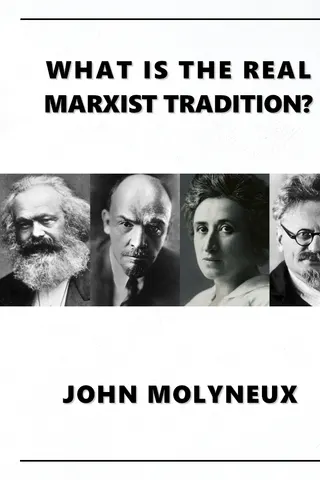
This reading path starts with two plain introductions and the two shortest classics, the Manifesto and Engels's Socialism: Utopian and Scientific. The second stage goes to Marx and Engels themselves on wages, capital, the state, the family and how a future society might share its wealth. The third follows the tradition after Marx: Lenin on the party and on imperialism, Rosa Luxemburg on the mass strike, Mao on China's peasants, and Domenico Losurdo on why Western Marxism lost touch with the anti-colonial world. The last stage turns to Black and African socialism, from Padmore to Cabral, Sankara and Walter Rodney.